Category Archives: Agvocating
Fellow Agvocate Ryan Goodman Featured on CNN’s Food Blog Eatocracy!!
American cattleman and Agvocate Ryan Goodman is making noise on CNN’s food blog! He writes a great blog about growing up in agriculture, learning about ag in different parts of the country, and how we all need to work together to create a better understanding between the ag industry and consumers.
Great job, Ryan! I Am Agriculture Proud!
Share this:

Indiana Vino Adventure: Lunch
After a great wine-filled breakfast at Easley Winery, it was now time to head off to our next destination on the Wine Tour journey: Wine for Lunch at Olivery Winery!

I LOVE this shot. I caught this just right as the sun came in the skylight.
(If you need to catch up on our journey, read my past two posts – Marion County Farm Bureau Wine Tour and Indiana Vino Adventure: Breakfast.)
All caught up? OK, back to Oliver Winery! I’ve always heard about it and I already knew that I loved their Oliver Soft Red wine so needless to say I was pretty pumped about the visit!
Once we arrived, we met with Vineyard Manager Bernie Parker who gave us a tour of their show vineyard and shared his WEALTH of knowledge about grape growing and wine making. No seriously, he taught us a lot. I mean, who knew that you could use helicopters to decrease frost damage?!! (More on that fact later.)
Bernie told us about the history of Oliver Winery, how the business has grown over the years, and several interesting facts about grapes and wine.
Here are a few Did You Knows for your reading pleasure:
★ DYK: There are wineries in all 50 states! The hybridization of grapes allow states to grow them that normally wouldn’t be able to.
★ DYK: It takes 3 years to get a crop off of a vine. They are transferred form the nursery to the field and they can be in full production by the 4th year. Talk about needing to have patience!
★DYK: All the grapes at Oliver Winery are currently HAND PICKED! With 54 acres of grapes and different varieties that need to be picked at different times, they sure stay busy!
★ DKY: The commercial lifespan of a vine is 30-40 years! (So think back to that patience I said you needed to have to wait the 3-4 years for your vines to produce grapes…it is well worth the wait!) That’s a pretty good investment if you ask me!
Aren’t those some neat facts?! It was definitely an educational experience with Bernie and the Oliver Winery crew.
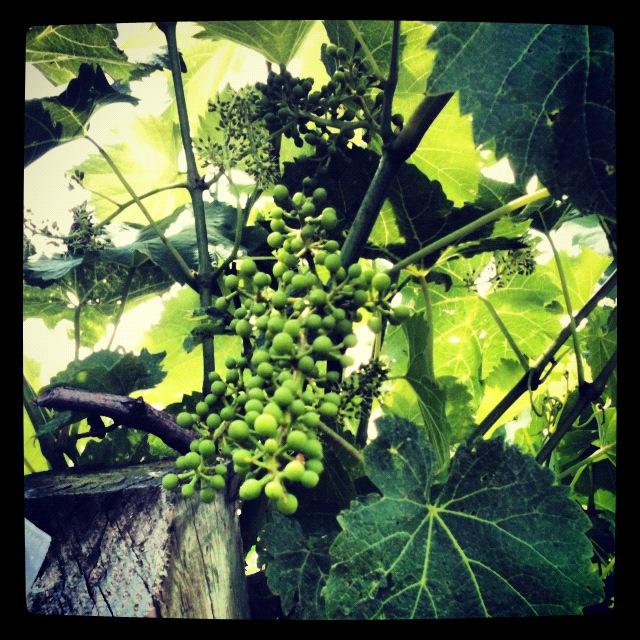
Ok, now back to that helicopter thing I mentioned earlier.
Frost is a main concern for grapes because it causes significant damage to crops if the frost is bad enough. They had a few bad frosts in the past so they decided to get a little bit creative with their methods in trying to decrease the severity of the frosts.
One method they use is to have “Frost Fans” sit around the vineyards to pull warmer air down and moves it through the vineyard which raises temperatures by 4-5 degrees throughout the vineyard. Frost causes more damage the longer it sits on the vines so moving the air keeps the frost from being able to settle.
And then the other method, like I mentioned earlier, is to rent helicopters to fly around the vineyard to push the warm air down. They created a path that was less than 5 min. to make a full circle because that’s the time it takes for the temps to cool back down. Neat huh?!
Now, this might seem a little extreme at first but its well worth it in the long run.
“Helicopters are expensive, but if we didn’t have these methods we could have lost 70% of our crop, but with these innovations we only lost 20%. So even with the expense, just a one-time use makes your money back,” Bernie explained.
I agree Bernie, way worth it to save your crops!
After our tour we went inside to have our wine tasting and eat lunch (that’s where the lunch part of the title comes in) in case you’re a little tired today and missed the connection. 🙂
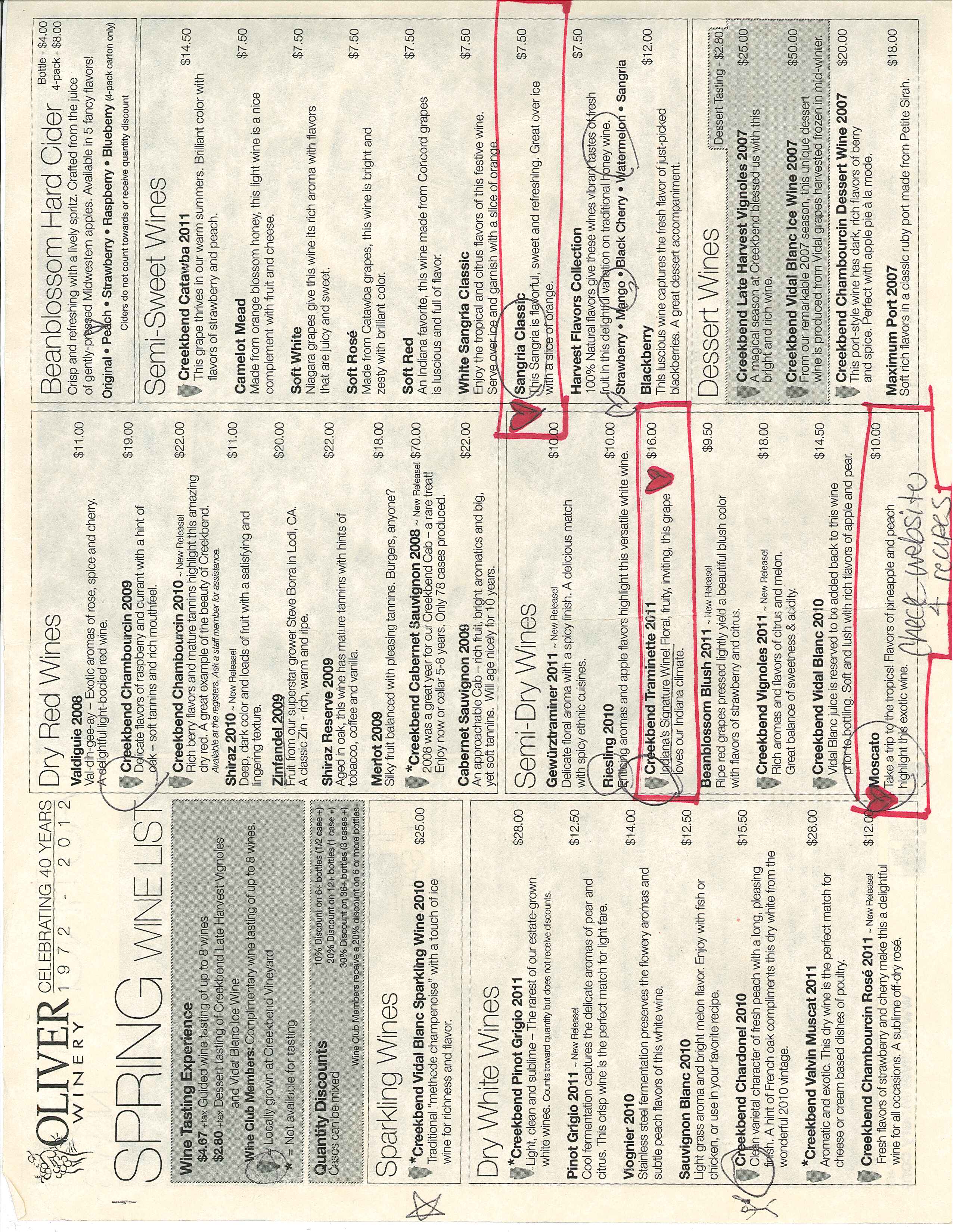
Here were my favorites!
After the tasting we had a nice lunch outside on their patio and re-fueled for the afternoon ahead.
By then it was about time to head to our next destination but we couldn’t leave without getting a few souvenirs to take home! Wine counts as souvenirs right?
We had GREAT time at Oliver Winery and I want to give a huge THANK YOU to Bernie and the rest of the staff for being such great hosts and teaching us about grapes and wine! I will definitely be making a trip back soon.
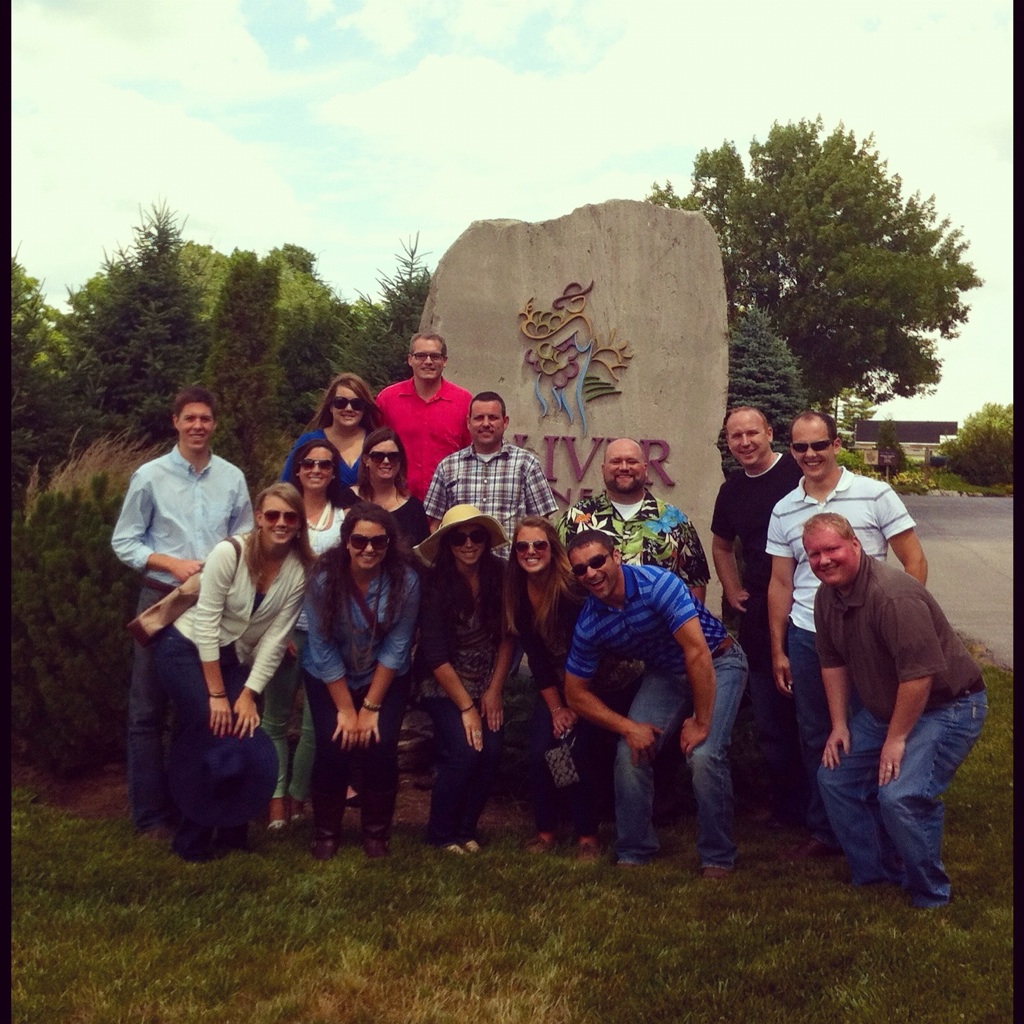
What a good lookin’ group! Marion County Farm Bureau Wine Tour 2012
Is it just me, or does it seem like we’ve already had a whole day’s worth of wining and dining? We were just now at lunch. We still had three more stops ahead of us!
Be sure to check back soon for the third leg of our tour, you won’t want to miss dinner!
Share this:

Indiana Vino Adventure: Breakfast
Now, some of you might be slightly confused by this title, especially if you didn’t read my post from yesterday. But I have to admit, I did drink wine for breakfast on Saturday (don’t worry this isn’t a regular occurrence) at our first stop of the Marion County Farm Bureau Wine Tour.
I mean technically it was only a few sips during the tasting, and it was more like brunch because it was at 10a.m. but I’d say it still counts – wine for breakfast.
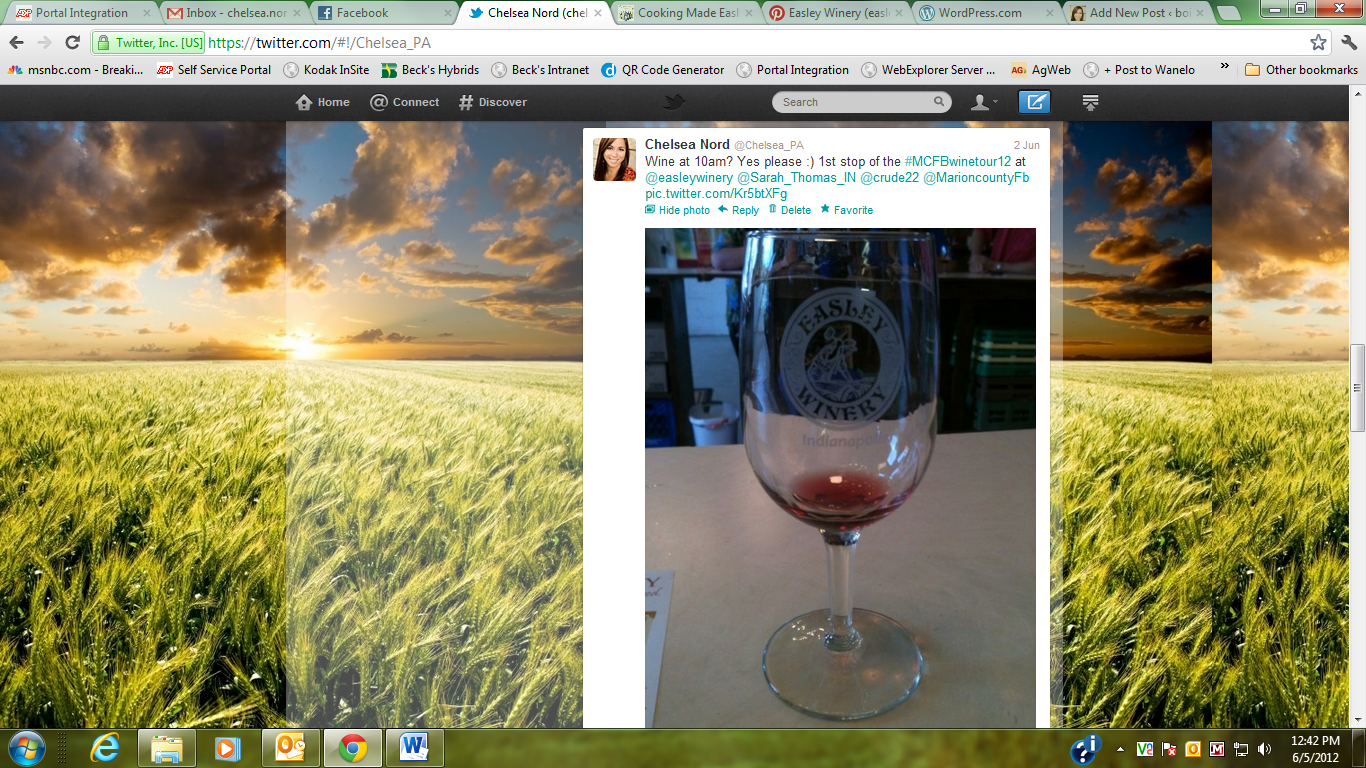
We kicked off our wine tour at Easley Winery in Indianapolis, IN, where we were able to taste several great wines from their collection.
I had never heard about Easley Winery before this trip, being a southern Indiana girl and all, but it was a great little place!
A little history about their winery:
“Jack & Joan Easley purchased the former Fertig Ice Cream factory in downtown Indianapolis and had their first grape crush in the fall of 1974. This facility is still in its original location and is located in downtown Indy’s Cole Noble Commercial Arts District. Today, second generation owners Mark & Meredith Easley continue the family tradition of creating and selling award-winning wines and champagnes made right in the heart of Indiana. Easley Winery offers 20 or more wine and champagne offerings depending on the year and season. Great wines are meant to be shared, and at Easley Winery, we’ve been creating memories since 1974.”
During our tasting, we were taken to their Barrel Aging Room and got to select 7 wines to taste.

Here were my favorites!
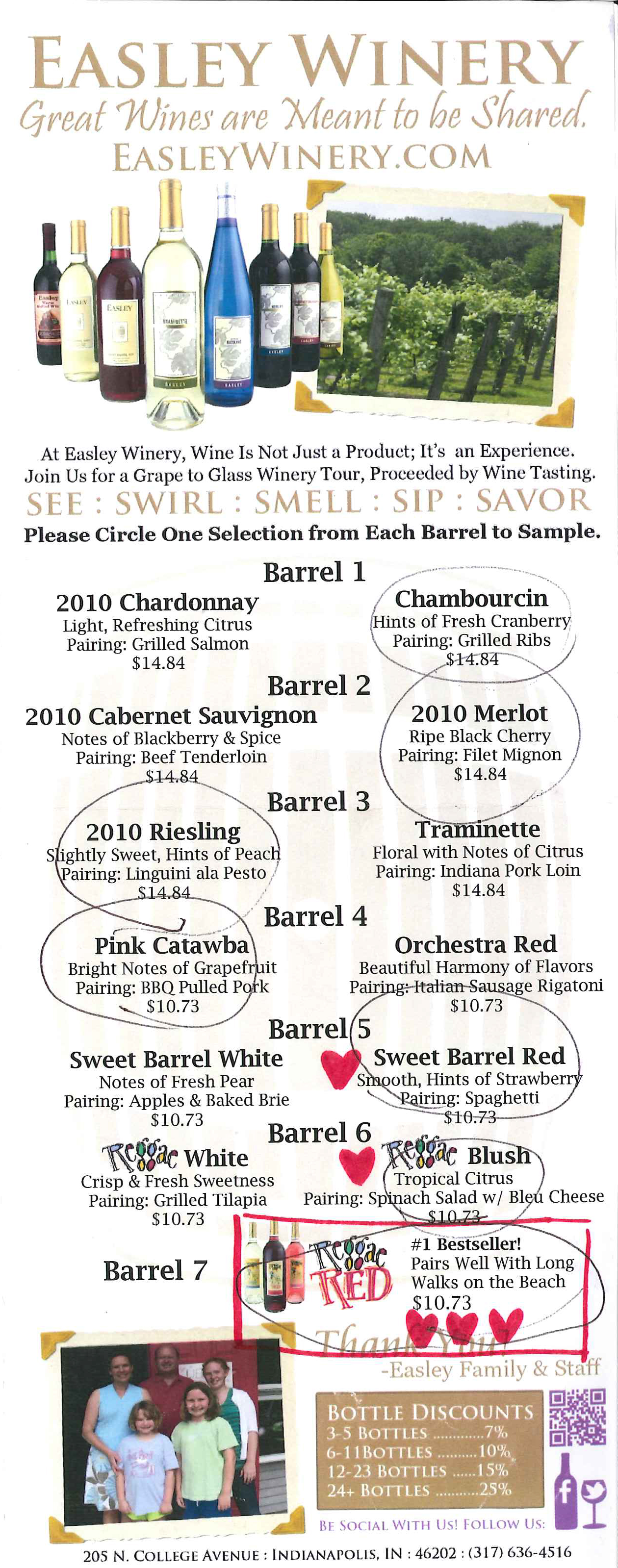
I am more of a ‘sweet wine’ person so naturally my favorites were the sweet wines. My #1 fave was the Reggae Red, which makes sense as it is their #1 bestseller! (So naturally, I had to help increase my economic impact by purchasing a bottle.) ♥
They also gave us several good tips on what to pair the wines with. One cool thing that I thought was unique was they gave us recipes to take home for making fun summer cocktails with their wines!

I can’t wait to try these!
Have any of you tried Easley’s Reggae Red or any of their Reggae wines? Let me know what you think if you do!
We had a great time during our first stop and I’d like to say a big THANK YOU to the staff at Easley Winery for your hospitality and great tips!
But I repeat, this was only our first stop. We still had a long day ahead of us, so we headed back to the bus to travel to our next stop on the tour – Oliver Winery!
Be sure to check back soon for Part 2 of the Wine Tour “Indiana Vino Adventure: Lunch” at Oliver Winery! I have a lot of cool things to include in this blog so you won’t want to miss it!
Happy Tuesday!
Oh, and P.S. – did you know that Easley Winery has a Pinterest account? Check it out for some fun recipes, facts, and wine inspired décor!
Share this:

Indy Adventure – Farm Bureau Wine Tour!
Wow what a great weekend!
My parents were in town, I managed to squeeze in some pool time, and had an AMAZING time at the Marion County Farm Bureau wine tour!

In Farm Bureau, we try to plan activities throughout the year which allow us to tour local agri-tourism sites, learn about different agricultural practices in Indiana and have fun at the same time. All of the activities pretty much guarantee a good time, but I was especially excited for this one, we planned a wine tour!
Some of you might not have thought that the wine industry was a part of agriculture but it is actually a very big industry and has a lot of similarities to crop farming.
So, I like to consider myself a wine fanatic (and apparently Klout does too?) but I still learned a lot during our vino-filled day!
Did You Know: There are over 6,700 family wineries in the U.S.?
As for the wine industry as a whole, wineries in all 50 states attract 27 million tourists annually, create 1.1 million jobs in America and have a $162 billion economic impact on the American economy. – Wine Institute
If you ask me, I’d say that’s pretty impressive!
During our wine tour we visited five central Indiana Wineries where we tried several different wines, toured their facilities, and made an economic impact on the industry (AKA…buy wine to take home) ♥
Over the course of the day we visited:
-
Easley Winery – Indianapolis, IN
-
Oliver Winery – Bloomington, IN
-
Butler Winery – Bloomington, IN
-
Brown County Winery – Nashville, IN
-
Mallow Run Winery – Bargersville, IN
Have any of you visited these wineries?
We had such a great time! I have a lot of neat information to share with all of you but if I tried to squeeze all of our fun into one blog, you would need a nap just from reading it. So in an effort to help you refrain from tuckering out, I am going to re-cap our “Indiana Vino Adventure” over the course of three posts: Breakfast, Lunch, and Dinner. (Who can guess why this relates?)
Be sure to check back for an inside look at these awesome wineries that are right here in our own backyards! And better yet – if you subscribe to my blog by email, my posts will be delivered right to you inbox so you won’t miss a thing!
Share this:

Better Late Than Never – Domino’s Ag Pizza Party
So I was a little late on this but I finally had my Domino’s Ag Pizza Party the other night!

In case you didn’t hear about this, the HSUS recently proposed that Domino’s stop using meat from pigs that are raised in gestation crates as some of the other restaurants have done, but Domino’s rejected their proposal because they want to rely on animal experts to determine the best way to raise an animal, not extremist animal rights groups.
According to Domino’s, “The American Veterinary Medical Association and the American Association of Swine Veterinarians have published statements indicating there are advantages and disadvantages to both cage-free and caged pork production methods. We rely on animal experts to determine what is the best way to raise an animal that’s being used for food.”
“It’s important to show our consumers that we care about animal welfare,” said Mike Davelaar, salesman for Quality Liquid Feeds, Brandon, SD. “Domino’s is taking the time to check with industry experts to make sure that what they are being asked to do is in the best interests of the livestock that we care for. I hope this campaign shows other companies and consumers that doing the right thing is just that – doing the right thing. They deserve to be recognized for making actual animal welfare the priority.”
So in order to support Domino’s and show our appreciation to them for standing up to HSUS and trusting the agricultural industry, the industry got together to throw them an Ag Pizza Party!
On the weekend of May 19th members of the agricultural industry and community bought Domino’s pizzas and brought them a thank you note to show their appreciation.

The event was on Facebook and they had over 2,000 people attend! They also posted this note on the event wall to explain the purpose of the event.
Note: This event is to advocate to allow experts in animal behavior and care to do proper research to ensure any changes made to the way animals are cared for are to help the animals’ well-being and not decrease the level of care they receive. We thank Domino’s for standing up for these experts. Any posts that are off topic, attacking individuals and companies or show gruesome visuals of animal abuse (crush videos) will be deleted and the user posting will be banned. If you would like to post or discuss other information please feel free to at our page The Truth About Agriculture.
So on Tuesday I enjoyed MY Domino’s Ag Pizza Party to support this cause as well.

And it was delicious! 🙂
Did any of you have or attend an Ag Pizza Party for Domino’s? I’d love to hear about them!
Happy Friday! Thanks to everyone who supports farmers and ranchers!!
Share this:

FIVE AGRICULTURAL PRODUCTS YOU CAN BUY AT WALMART
So we all know that Wal-Mart has pretty much everything right? But did you ever think you could go there to buy agricultural products?
Most people assume that you have to go to Rural King or Tractor Supply Company (if they even know what those stores are), but actually you don’t. You can buy your food, clothes, bathroom supplies, and agricultural things right in the same store!
And as a side note: your food, clothes, and most bathroom supplies are actually agricultural products too—but that’s a whole different blog topic. 🙂
But today, I wanted to share just a few of the familiar and not so familiar ag products in Walmart.
AG PRODUCTS:
1. Mane ‘n Tail Shampoo and Conditioner:
Mane ‘n Tail products were originally developed for horses. Horse owners reported seeing significant improvement in the health and appearance of their horses’ manes and tails. Similar results were seen when horse owners and groomers used the products on themselves. This was the beginning of the Mane ‘n Tail legend. You can use it on both you and your horse!

2. Vegetable Garden Seed Packets:
These are very common products and are usually always in stock.
Also, most any vegetable you would want to grow is available from popular things like sweet corn or tomatoes, to more obscure things like okra or peppers.

3. Suncast 8-Panel Garden Kit:
Now if you’re saying to yourself, but I don’t have a garden to grow those seeds in… don’t worry, Wal-Mart has one of those too! This Garden Kit has raised sides, rigid resin construction and holds 14 cu. ft. of soil. It also comes with 8 panels, 12 connectors, and 16 steel spikes so you can grow multiple plants. How convenient!

4. Heartland: Metal Curry Comb
These are used to clean caked on mud out of livestock when they are extremely dirty. These have been used on horses, but typically aren’t recommended as they have sensitive skin. They are primarily used for cattle and are very common among the industry.

And finally…
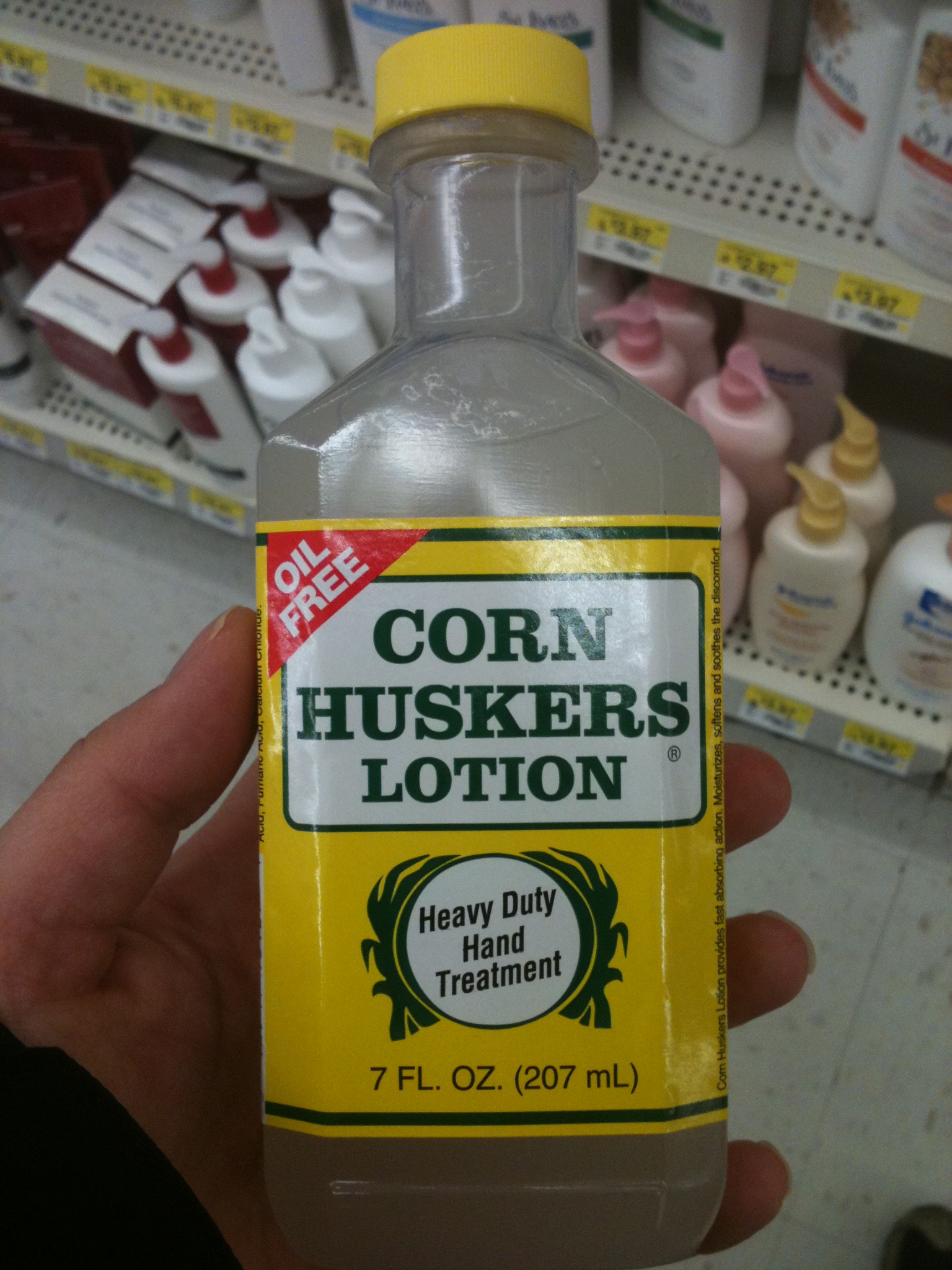
5. Corn Huskers Lotion:
This one I found one day when I was just browsing the lotion aisle, I thought it was so cool! This lotion is an oil-free, heavy duty hand treatment that provides fast penetrating action. It moisturizes and softens dry skin, as well as soothes discomfort of irritated, chapped or cracked skin.
This is very popular for farmers or people who are outside working with their hands a lot. Constant washing can also dry your hands out really bad, so this can also work for other professions.
Have you guys ever seen a new product in Wal-Mart that was agriculture related? I would be interested in hearing about them!
Also, be sure to check back tomorrow for a preview of a neat event that I will be participating in next week!
Share this:

BSE Case Confirmed in California – Food Supply STILL Safe
On April 24, 2012, the USDA announced that they had a confirmed case of BSE (Bovine Spongiform Encephalopathy) in a California Dairy cow. It is only the 4th case ever found in the U.S. but it is still raising a lot of concern with consumers.
There have been several articles on this already, but I wanted to write one to help calm those fears. Even just this morning, people on social media were panicking because of the headlines, but I’ve done my research and I went to school for animal and food science so I know how the screening procedures work and can assure you that the food supply is still safe!
First, let’s dive into what BSE actually is.

What is BSE?
- Bovine Spongiform Encephalopathy (BSE), commonly called “mad cow disease,” is a degenerative neurological disease of cattle that is caused by misfolded proteins (called prions) that build up in the central nervous system (CNS) and eventually kill nerve cells.
- It is typically caused by eating contaminated feed, but the ingredients that could cause this have been banned since 1997.
- The USDA maintains an ongoing BSE surveillance program and currently tests approximately 40,000 high-risk cattle annually, a number that exceeds the OIE’s recommended testing levels for the risk status assigned to the United States by the OIE. The ongoing BSE surveillance program is designed to detect BSE at a prevalence level of one case per 1 million adult cattle. All U.S. cattle are inspected by a USDA inspector or veterinarian before going to harvest, with high-risk animals identified for BSE testing. Meat from cattle being tested for BSE is held until the test results are confirmed. If you would like to know more about BSE, please visit BSEinfo.org
Now back to this current case.
IMPORTANT FACTS:
- This animal tested positive for ‘atypical BSE’ which is a very rare form of the disease not generally associated with eating contaminated feed
- This cow did not enter the food chain. The cow was on a rendering facility, it was never meant to go into the food supply in the first place. America’s farmers, ranchers, and the USDA took the proper procedures to isolate the animal so the beef supply is still safe.
- BSE affects the cow’s brain and spinal cord; therefore, it never transfers into a cow’s milk supply. The milk supply is also still safe!
The media has been covering this heavily (which is ok in theory because people have the right to be informed) but their use of terms like “Mad Cow Disease” and not presenting all of the facts immediately causes more panic and fear in consumers, especially the consumers who don’t know what BSE is. That is why I wanted to write this article to help de-bunk some of the myths and uncertainties about this disease.
The agricultural industry works extremely hard to make sure your food supply is safe. If this would get into the food supply, they would be at the same risk as consumers like us. Therefore, they want to ensure food safety for everyone.
If you have any more questions or concerns about BSE and this case, I encourage you to contact me or check out this cattlemen’s blog: BSE Confirmed In California Cow – Food Supply Safe
He has a lot of good information about what the USDA is doing to ensure our food safety, the video announcement from the USDA, and great links to learn more about BSE.
Share this:

Great post from Nebraska Farm Bureau! Thanks for sharing! Have you attended or conducted an Ag in the Classroom session? I’d love to hear about it!

 We had another great question come in to the blog from a reader:
Q: Why is my child learning about agriculture in school?
A: Agriculture is a vital part of today’s society. One in three jobs in Nebraska has something to do with agriculture. Matter of fact, most adults and children have a tie to a family farm or ranch. Although they themselves might not be in the center of agriculture, there is a very good chance that their ancestors were.
It is important for children to learn at a young age where their food comes from. The food fairy does not magically stock the shelves at the grocery store and chocolate milk does not come from a brown cow. They need to understand that a lot of hard work goes into their food production—somebody tills the soil, plants the seeds, and then harvests the food as well as cares…
View original post 221 more words
Share this:
Guest Blog: My experience with packing plant employees
Happy Friday Everyone!
Today I wanted to share a blog from a fellow agvocate Travis Arp. He’s a Ph.D. student at Colorado State University studying in Meat Science. He grew up on a family farm in south-central Wisconsin where they raised purebred Gelbvieh and commercial cattle. His passion is cattle, but has developed a love for meat science and all things production agriculture related. His hope is to share his experiences and knowledge with industry friends and consumers alike.
The other day he had a great article where he shared his experience visiting a meat packing plant. With all of the misconceptions and negative stereotypes this industry has been getting lately, I thought it would be good to share his first-hand experience with all of you and I encourage you to share it with your friends and neighbors.
For the next three weeks, my life is going to be spent in either a Holiday Inn Express or a beef packing plant…and likely in the plant more than the hotel. Throughout my experiences in the meat industry, I have been fortunate to have been able to conduct research in many industrial-type beef packing plants that range from 500-600 to upwards of 5000 head of cattle harvested per day. I’ve also toured several packing plants for poultry, pork and lamb. Its a fascinating experience and even last night while collecting kill-floor data for my project, a fellow graduate student remarked to me that no matter how many times she has been in a plant, watching the wheels in motion is still something incredible to witness. (Aside: its often commented by anti-industrialized ag people that they want to tour plants, but don’t have access. The reality is, is that these are HIGHLY secure facilities. When I enter a plant, I have to have a contact in the plant to get me in, go through a very rigorous security procedure, and then have those people escort me in. You can’t expect to have walk-in tours and waltz through the door. These companies have to be concerned about food safety and security issues; like folks from HSUS taking “undercover videos,” publishing them to the internet and taking practices out of context. Packing plants do not have an open door policy…not because they don’t want people to see what happens, but in the interest of company, and more importantly, food security)
One of the defacto arguments against large packing plants is that plant workers have terrible working conditions, and that these are oppressed employees that generally do not enjoy the work they have to do. But again, this is from people that have little to no in-plant experience. Through my many hours spent in a multitude of packing plants, I can honestly say that this is not the case.
Working in a packing plant is similar to any assembly line-type job. These workers work an 8 hour shift, they are members of a union, and they have multiple 15 minutes breaks during each shift and a 30 minute lunch. Each employee has an assigned job which they do all shift. Workers stand on the production line, and cut the same piece of meat or remove the same part of the carcass for an entire shift. Most of these jobs, through improvements in technology, have been made easier for workers over the years…whether that be improvements from hand-held knives to pneumatic air knives, or from cutting the hide off the carcass to automated hide pullers in which they simply have to push a button. When an individual is hired at a plant, they are often given the least-skilled positions, but have opportunity for advancements to more-skilled positions on the line. This could be starting as a carcass trimmer and eventually moving up to the fabrication line where they are required to be skilled meat cutters (and are payed better). Furthermore, all of the training for these positions are offered by the company to improve their skill set and offer them advancements in position and pay.
For years, carpel tunnel syndrome was an issue for meat cutters due to the strenuous, fast paced working conditions. This has been combated by packing plants by increasing the number of cutters to reduce stress on workers, educating on ways to prevent carpel tunnel, and designing more ergonomic designed tools. Also, one of the most interesting things I’ve witnessed at a plant is lines of workers stopping in the middle of production for them to do specialized stretches to keep this from being an issue. I’ve even heard of plants playing “The Chicken Dance” over a PA system at a plant to loosen up workers and let them stretch!
Meat cutting is an inherently dangerous job. You are working with carcasses that weigh upwards of 700 pounds, and are using razor sharp knives to dis-assemble carcass components. However, every plant has an EXTREMELY strenuous safety protocol that minimizes worker accidents. Cutters have to wear cut-proof equipment on basically ever exposed area of the body. Workers that handle live cattle have to wear Kevlar vests and helmets with a face mask. To even walk into a cooler, you have to wear steel-toe boots, ear plugs, a hard hat, and safety glasses. Safety is the number one priority for anyone that enters the plant.
To conduct research in a packing plant, it requires me to have a considerable amount of interaction with line employees, not just supervisors and corporate representatives. It’s required to collect product off the line or get research carcasses segregated for data collection. I have made many friends in the plant, and even learned the secret handshakes shared between workers on a fabrication lines. They know me by name, and likewise, and enjoy having people come into the plant and see what they are doing. They take as much pride in the product being produced as anyone in the company, and it’s a requirement for them to keep their job and put themselves in a position to advance. It is not a job that requires a college or even a high school degree, but offers an opportunity for these workers to make a good wage and have a steady paying job. I’m sure many of these people don’t grow up thinking “I want to work on the chuck fabrication line at a packing plant,” but production of any good requires a labor force willing to work, and do so in a quality manner. The same goes for any industry that produces their product in a similar manner to packing plants.
As industrialization has improved the efficiency of nearly every industry in the United States, along with it comes the need for a labor force which is willing to work in those settings. The current way we harvest livestock in large quantities requires an assembly line work structure that differs very little from industries like the auto industry, electronics, or even that which is required for produce and processed foods. The process of killing an animal and the associated dis-assembly of a carcass into subprimal cuts is considered a gruesome process by consumers. However, whether you are killing five steers at a local locker or 5000 at a large packing plant, the harvesting process is the same. Therefore, I think people assume worker conditions are poor just because we are killing animals and not assembling a car.
Before we jump to conclusions on what these people do or how they are treated, talk to someone who has experience working with these people and they will tell you about the environment they work in. These companies place worker safety before everything else during production, and compensate these workers fairly for the hard work the conduct every day. And believe it or not, most of these people genuinely enjoy doing the work they do. The job isn’t pretty, but is necessary to put safe, wholesome meat on your plate. And that is something everyone, from the top executives to the workers on the line, are concerned with.
Thanks for sharing this Travis! It was a great perspective and gives a great inside look in to the industry and some of the current things they are doing to give their employees the best environment possible. To read more from Travis, follow his blog : The Meat of The Issues
Share this:
Beef is red, right?
As I was doing my regular check of the news and social media this morning, I came across an article on “Pink Slime.” This is has been a viral topic in the news and social media which has been scaring consumers into boycotting beef, even though it is perfectly safe and we have been consuming it for over 20 years with no problems to anyone’s health or safety.
But that’s a whole separate topic… what I was most concerned about was a comment below the article from some reader which read:
“…The next thing that should be looked at is the red dye that is put on meat products either sent to grocery stores or put on by the grocery store to make the meat appear fresh. Real beef steak is not “red” it is grey. It is time to start providing consumers with the “real products” instead of “doctored” products…”
GREY! SERIOUSLY? I was instantly flabbergasted. I couldn’t believe that this person legitimately thought that steak meat was grey.
With all due respect sir, it’s called “red meat” for a reason.
WHY IS BEEF CALLED A “RED” MEAT?
Oxygen is delivered to muscles by the red cells in the blood. One of the proteins in meat, myoglobin, holds the oxygen in the muscle. The amount of myoglobin in animal muscles determines the color of meat. Beef is called a “red” meat because it contains more myoglobin than chicken or fish. Other “red” meats are veal, lamb, and pork.
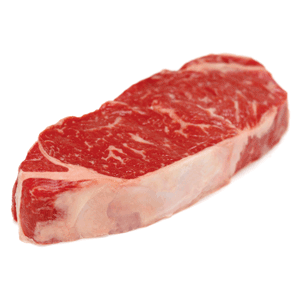
There is no “dye” which is used to make meat red. They only way it can look grey is if it sits out for a few days, is cooked, or is vacuum sealed which removes the oxygen. But even then, when you re-expose the meat to oxygen, it will return to its red color within a few minutes.
But this blog isn’t even about that “red vs. grey” subject. Most importantly, I’m using this as an example to highlight the serious DISCONNECT that most consumers have with the agricultural industry.
A large percentage of the public doesn’t even know where their food comes from. They just assume that it shows up magically in their grocery store. That is why they get so scared when media or anti-industry groups come out with dramatic or falsified articles regarding food or agriculture.
Being that I am an agricultural communications graduate, this is one of my most passionate topics. As an industry, we need to continue working to increase the public’s awareness of how things are produced. There have been a lot of programs started to help fix this disconnect such as agri-tourism businesses, farm to fork tours and Ag In the Classroom, but we still need to work harder to share our stories.
We need to work to create a clear line of communication and understanding between the public and our industry so that they can be informed to make educated choices about the food they eat.
How do you help share your agricultural story?
Send me a link to your “Ag-Story” and I will put a list together to post in a future blog.


 boilermakerag